Edesia
Website case study
Edesia Fine Foods: A Premium Food Website Built Around Provenance, Product Discovery and Trade Enquiries
Edesia Fine Foods curates Mediterranean ingredients for professional kitchens, hospitality buyers, distributors and food enthusiasts. The website has to communicate quality quickly, help visitors explore a specialist product range, and support both retail purchasing and trade conversations.
This case study looks at how the site brings together brand story, product education, ecommerce journeys, recipe inspiration and wholesale enquiry paths without reducing the business to a simple online catalogue.
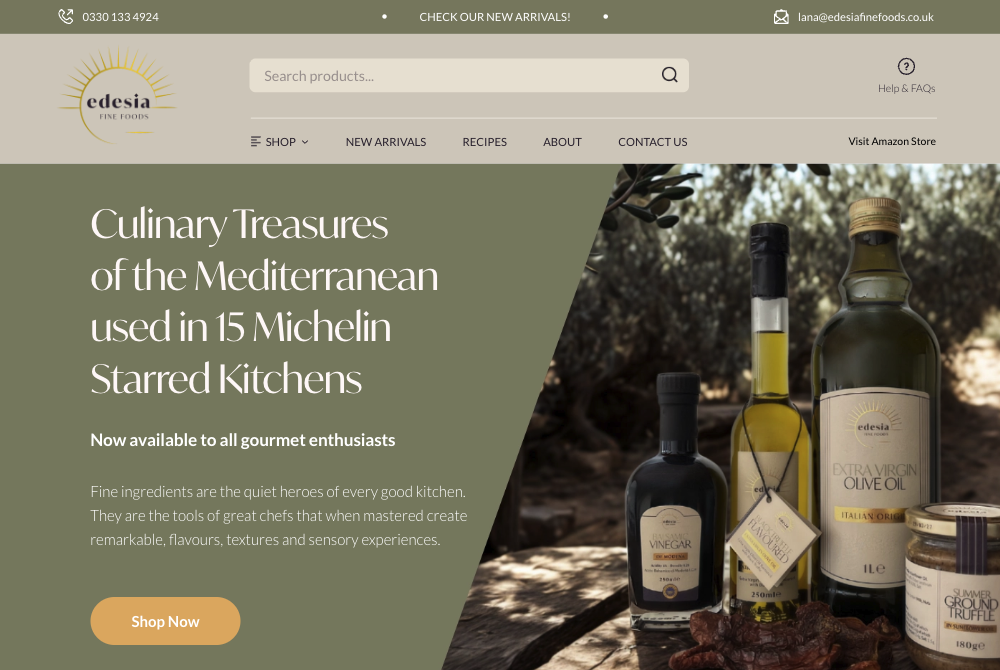
 ”
”Edesia Fine Foods website
Edesia Fine Foods
Premium Mediterranean food, ecommerce and trade supply
Chefs, restaurants, hospitality buyers, distributors and gourmet home cooks
Sell products, build trust and generate trade enquiries
The organisation
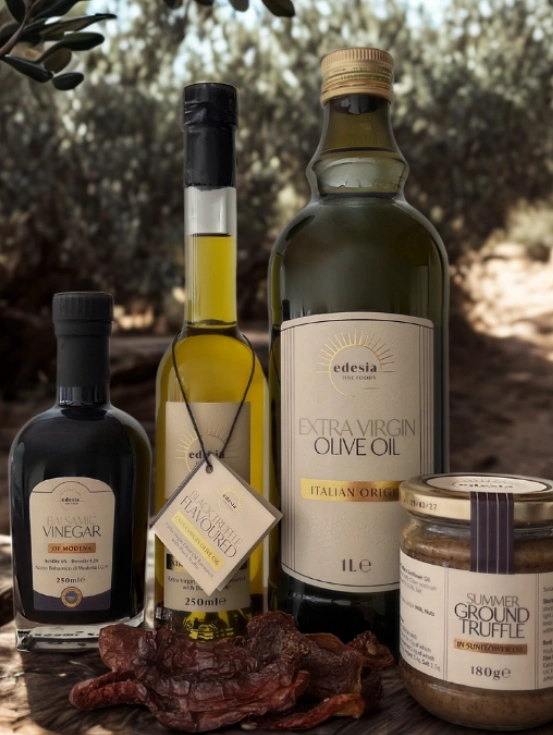
Edesia Fine Foods positions itself around culinary treasures from the Mediterranean. Its products include fresh olives and antipasti, dried vegetables, marinated vegetables, oils and vinegars, sauces and condiments, truffle products and rice.
The brand story is built around authenticity, provenance and quality. The name Edesia references the Roman goddess of food, which gives the website a natural route into heritage, craft and the pleasure of sharing food. That story matters because premium ingredients are rarely bought on price alone. Buyers need to believe in the sourcing, consistency and application of the product.
The website challenge
Edesia has a more complex job than a standard ecommerce shop. The site needs to support quick product discovery, but it also needs to reassure trade buyers that the products are reliable enough for professional kitchens.
The challenge is that different visitors arrive with different levels of intent. A chef may already know they need truffle slices or sherry vinegar. A distributor may be checking whether the range is suitable for trade. A home cook may be discovering the brand for the first time and need more guidance around flavour, pairings and use cases.
That creates four connected website goals:
- Help visitors understand the premium Mediterranean positioning quickly
- Make the product range easy to browse by category and use case
- Build confidence through quality signals, producer stories and professional endorsements
- Separate retail buying journeys from trade enquiries without making either route feel secondary
How the visitor journey is solved
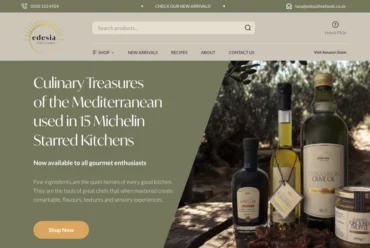
PositionThe homepage opens with premium Mediterranean ingredients and a clear route into the shop.
SegmentVisitors can browse core categories such as oils, vinegars, truffles, rice and marinated vegetables.
EducateProduct pages, recipes and pairing content explain application, flavour and accompanying ingredients.
ReassureProducer stories, PDO and PGI references, reviews and restaurant-sector proof reduce buyer hesitation.
ConvertVisitors can buy via Amazon checkout, request a call back, or contact the team for trade enquiries.
Challenge one: selling quality, not just products
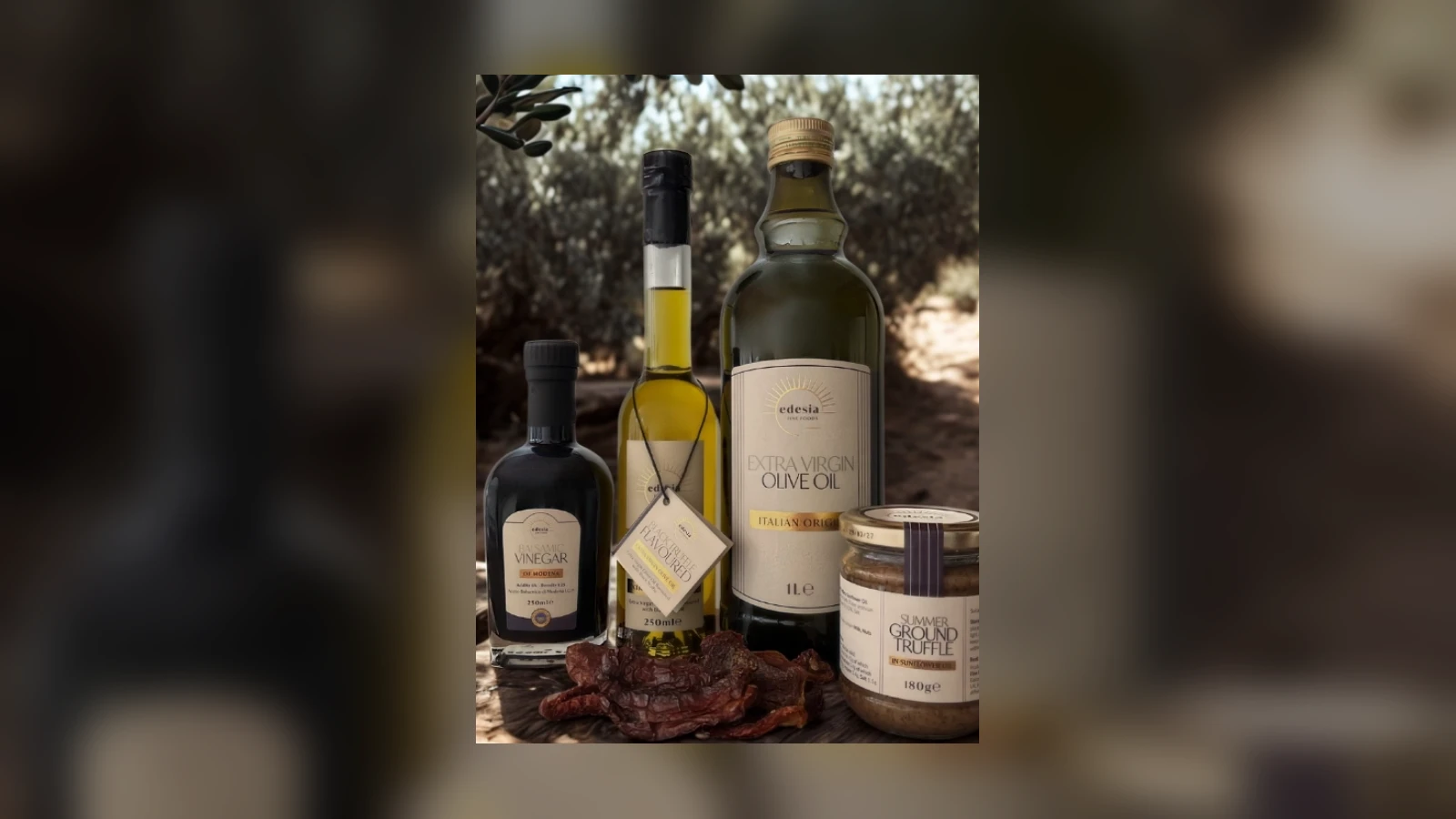
Premium ingredients need more explanation than everyday grocery items. A visitor needs to understand why a product deserves attention, what makes it useful, and where it fits in a dish or commercial kitchen.
The site solves this by keeping quality visible in several places. The homepage introduces Edesia as a curator of authentic Mediterranean ingredients. The about page explains the values behind the range: people, superior quality, variety and consistency. Product descriptions then move into practical detail, such as applications, pairings and accompanying ingredients.
This is important for both SEO and conversion. Search can bring people to a product page, but the product page still has to do the selling. The more specific the description, the easier it is for a buyer to imagine using the ingredient and the easier it is for search engines and AI-assisted tools to understand the product’s relevance.
Challenge two: serving retail and trade visitors together
Edesia needs to support two conversion paths. Some visitors want to buy a product directly. Others are businesses interested in wholesale, retail distribution or larger supply conversations.
The site solves this by giving shoppers direct product routes while keeping trade enquiries visible. Product cards and product pages support buying through Amazon checkout where available. For trade-led products and business buyers, the site uses enquiry routes, contact details and a clear wholesale message: registered businesses can contact Edesia to open a trade account.
This matters because forcing every visitor through the same ecommerce path would create friction. A chef, restaurant group or distributor may not be ready to buy a single unit online. They may need pricing, pack formats, supply consistency, delivery detail, or a call with the team. The website gives those visitors a next step that matches their intent.
Conversion paths the site supports
Retail product purchaseVisitors can browse categories and move from product interest to checkout.
Wholesale enquiryBusiness buyers have a route to contact the team and discuss trade accounts.
Assisted buyingRequest-a-call-back prompts help visitors who need advice before ordering.
Recipe-led discoveryRecipes and pairings help turn curiosity into product confidence.
Challenge three: proving trust before purchase
For premium food products, trust is built from several small signals rather than one big claim. The Edesia site uses producer stories, ingredient credentials, professional endorsements and practical product information to make the brand feel more credible.
The about page introduces artisan stories, including producers connected with truffle products and extra virgin olive oil. The site also explains quality marks such as PDO and PGI, which helps visitors understand why origin and production standards matter. These details support both commercial confidence and search visibility because they add specificity that generic category copy often lacks.
Endorsements from people in restaurant and food-sector roles add another layer of proof. They are especially useful because they speak to consistency, flavour and real kitchen use, not just brand preference.
Challenge four: turning content into commercial journeys
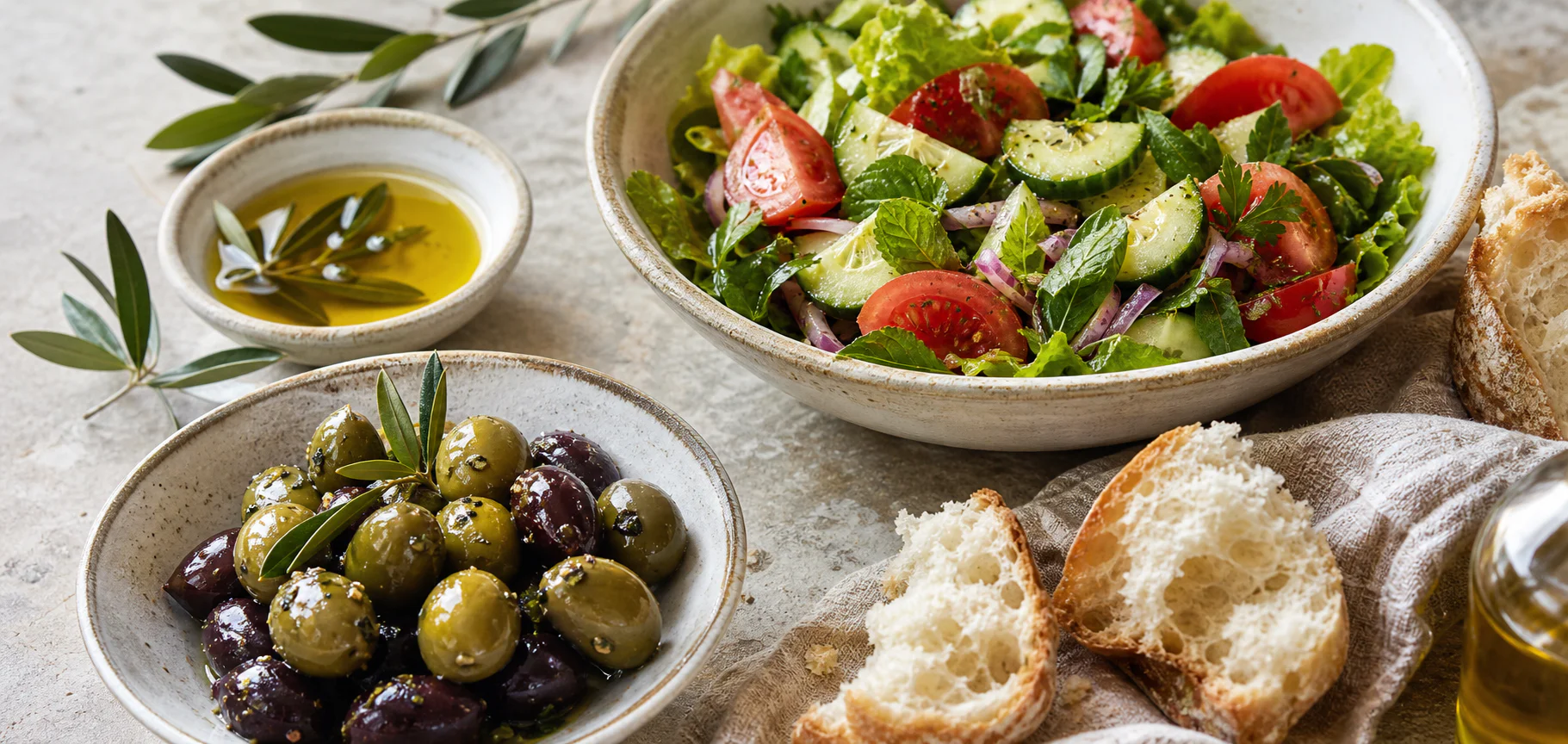
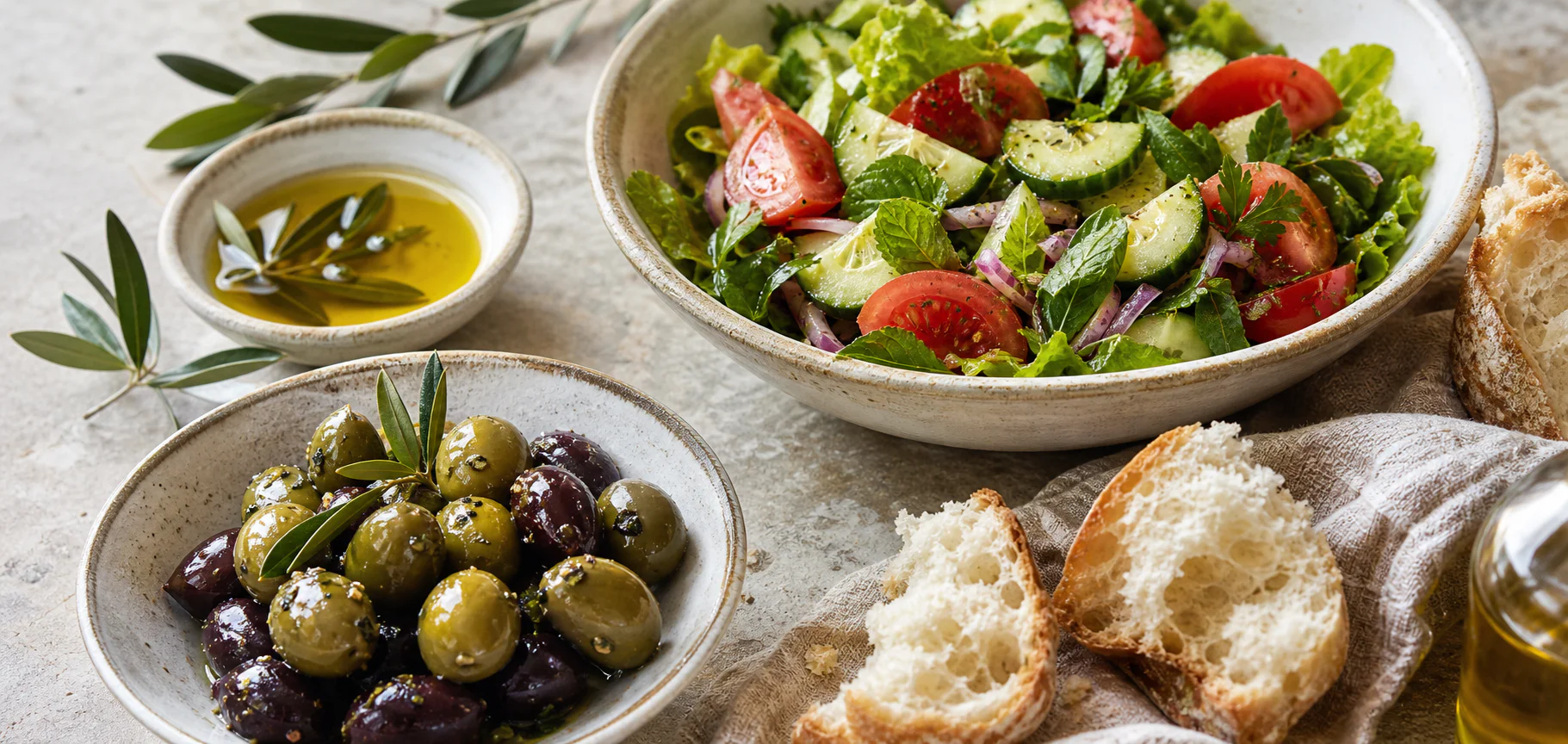
Recipe and pairing content gives Edesia a way to attract visitors who are not yet searching for a specific product. Someone looking for Mediterranean recipe inspiration, truffle uses, olive pairings or premium antipasti ideas may be earlier in the buying journey.
The site solves this by linking product discovery with food education. Recipes show the ingredients in context. Pairing guidance helps visitors understand how to use products well. Product pages include application notes and accompanying ingredients, which can encourage cross-selling and make the basket feel more considered.
The main opportunity is to keep tightening the internal links between educational content and product or trade pages. A recipe should guide the reader to the relevant ingredient. A product page should point to recipes, pairings and trade options. A trade page should reassure business buyers with range depth, proof and contact routes.
What works well
The website already has the right ingredients for a strong ecommerce and trade journey. The brand positioning is distinctive, the product categories are clear, and the site gives visitors several ways to move forward depending on their intent.
- The homepage quickly communicates premium Mediterranean food and routes visitors into the shop
- Product categories make the range easier to explore without overwhelming first-time visitors
- Product pages include practical details such as applications, dietary suitability and accompanying ingredients
- Trade enquiries are visible, which prevents business buyers being trapped in a consumer checkout journey
- Recipes and pairing content support discovery, education and internal linking
- Producer stories and quality credentials add depth to the brand and support AI search visibility
- Professional endorsements help bridge the gap between product claim and buyer confidence
Recommended next improvements
The next gains should focus on making the commercial journeys even clearer and easier to measure.
- Create a stronger dedicated trade page with audience-specific sections for restaurants, hospitality groups, retailers and distributors
- Add clearer calls to action on recipe and pairing pages, linking readers to the products used in each dish
- Use product category introductions to target search intent, such as premium truffle products, Mediterranean antipasti, Italian oils and vinegars, and restaurant-quality pantry ingredients
- Add structured FAQs to key product and category pages covering storage, pack size, trade supply, delivery and best uses
- Track product clicks, Amazon outbound clicks, trade enquiry form submissions, call-back requests, contact clicks and recipe-to-product journeys
- Turn restaurant-sector endorsements into short proof sections near trade calls to action
- Use internal links from artisan stories and sustainability content into relevant products and trade enquiry pages
Summary
Edesia Fine Foods has a website with a clear strategic job: attract people who care about premium Mediterranean ingredients, help them understand the range, and guide them towards the right conversion path.
The strongest part of the site is the way it combines product discovery with story and proof. It does not rely only on product listings. It also gives visitors reasons to trust the quality, understand the provenance and imagine practical use in a kitchen.
For future growth, the main opportunity is to make the trade journey more deliberate and measurable while continuing to connect recipes, product pages, category pages and enquiry routes. That would help Edesia turn more of its useful content into product interest, trade conversations and repeat customer relationships.
Need a clearer ecommerce or trade journey?
If your website needs to sell products, explain quality and generate business enquiries at the same time, Ace Web Studio can help improve the structure, content and conversion paths.
We focus on websites that connect content to business goals, so visitors can understand the offer, trust the brand and take the next step.
- Clients:
- Category:
Web Shop - Date: