
AI, websites and your business
AI in web design: amazing tools still need someone who knows the job
Describe your business. Press a button. Watch a website appear.
It is an impressive experience. If you have ever waited weeks for a website project to move forward, seeing a homepage materialise in minutes can feel like magic.
Then you try to make it yours.
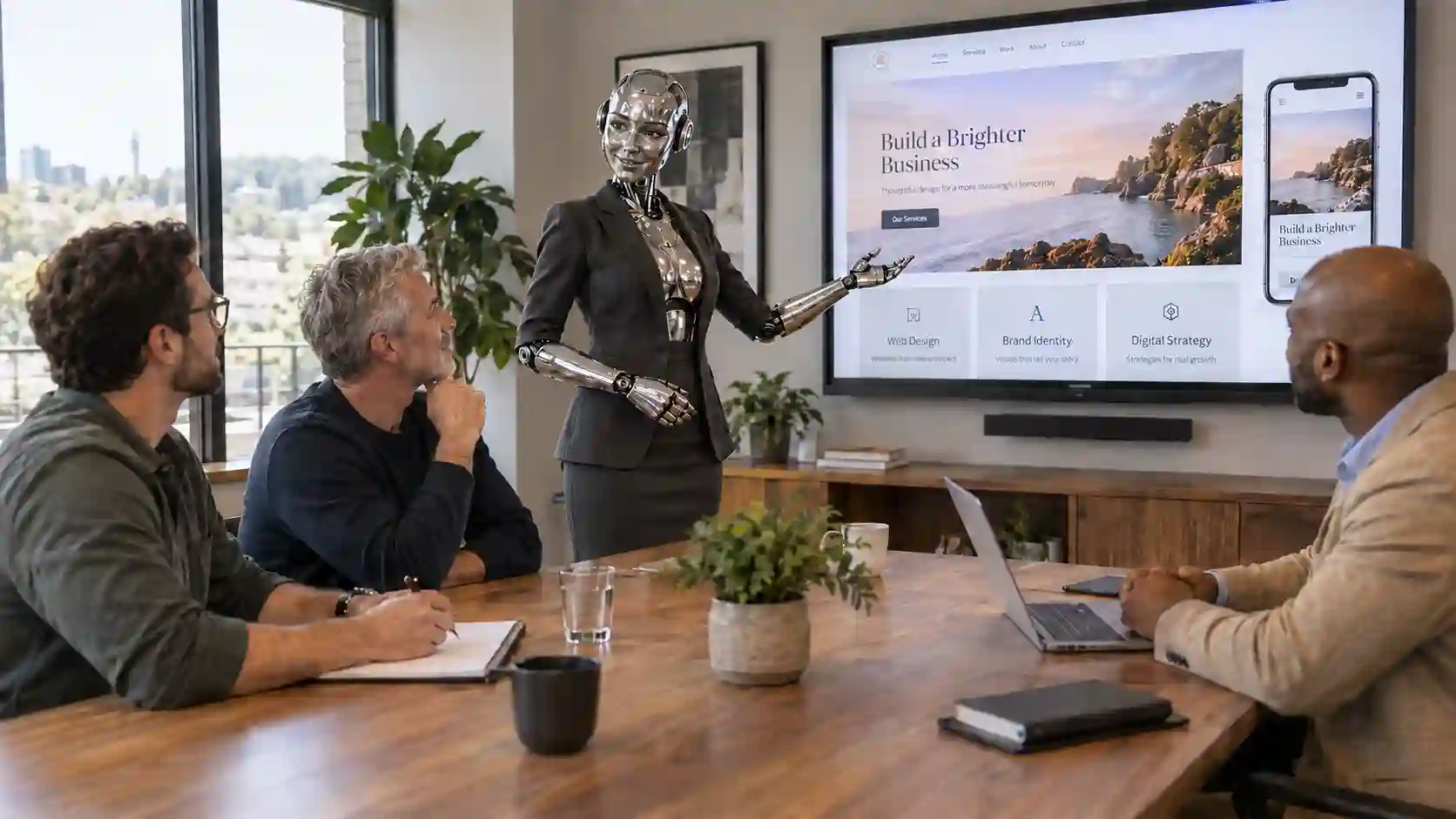
The wording is bland. The photographs could belong to any business. You ask for a different layout, then another. Something moves on the mobile version. The contact form needs attention. Your allowance is running low, and the tool suggests an upgrade.
Somewhere between the first exciting preview and the fifth attempt to fix the menu, you discover how much work sits behind a useful website.
AI is an extraordinary tool for web design. Its value grows when someone knows what to ask for, what to question and when the work is actually ready.
1. The magic wears off when the website has to do a job
The sales pitch is seductive: anyone can build a beautiful business website without design or technical experience.
For a simple project, an AI builder can be a perfectly reasonable starting point. A small event page or an early business idea may need little more than a clear explanation and a way to get in touch.
But a website that helps you win customers has more demanding work to do. It needs to explain your offer, answer doubts, show evidence and make the next step easy.
Consider a local landscaping business. A visitor searching for someone to redesign a small garden wants to see relevant projects, understand the service area and find out how to arrange a visit. A grand headline about “transforming outdoor experiences” does very little of that work.
AI can generate that headline in seconds. It can also help write something much more useful, once it has the right brief.
That brief comes from understanding the business: which jobs you want, why customers choose you, what worries them and what happens after they enquire. A professional designer helps turn those answers into pages that make sense.
Researchers Anna Kaley and Raluca Budiu at Nielsen Norman Group put the distinction neatly:
“Shipping something quickly is not the same as creating something useful.”
— Anna Kaley and Raluca Budiu, The Custodial Era of UX: Cleaning Up After AI
The uncomfortable part of the instant-website promise is how easily it makes the invisible work disappear. Research, judgement, editing and testing still need doing. They simply become your responsibility.
In professional hands, AI can speed up early layouts, help explore ideas and assist with development. Someone still needs to decide whether the result deserves to represent your business.
2. “Free to start” can become an expensive habit
AI feels cheap because the first result arrives so quickly. The cost becomes clearer when you start asking for changes.
Charging models vary. Some tools use subscriptions with usage limits; others use credits or token allowances. A token is a small piece of text the AI processes. Your request is only part of the work: the tool may also read existing code and generate a replacement.
That means a short request can involve a surprisingly large amount of processing. Bolt’s token-efficiency guidance, for example, explains that larger projects require more code to be processed and that repeated automatic repair attempts consume tokens.
Its advice includes this rather sensible instruction:
“Avoid clicking Attempt fix over and over, hoping for things to eventually work out.”
You can see how the spending spiral begins. Change the design. Repair the layout. Restore something that disappeared. Try a different approach. Run out of allowance. Consider the next plan.
And throughout this process, you are contributing something the pricing page cannot measure: your time.
Professional help has a cost too. The useful comparison is the total cost of reaching a dependable result, including subscriptions, your working hours, testing and future support. The cheapest first screen tells you very little about that total.
Everyday updates should be straightforward
A custom-built website does not have to consume AI tokens every time you change an opening hour. It can include a content management system, such as WordPress, so you can edit text, photographs and services through familiar controls.
The awkward arrangement is a site where routine changes depend on asking an AI tool to rewrite code. That can turn a small update into another round of generation and checking.
Before committing to a build, ask for a demonstration: change a price, replace a photograph and add a service. Find out what you can edit yourself, what needs technical help and which ongoing charges apply.
A good website should fit the way you run your business after launch.
3. Your business deserves more than the conveyor-belt look
You may recognise the pattern: an enormous headline, a soft gradient, three rounded boxes and a cheerful illustration that could advertise almost anything.
There is nothing inherently wrong with any of those elements. The problem starts when the whole page feels interchangeable.
Try a simple test. Cover your logo and business name. Could the website belong to your nearest competitor?
If the answer is yes, another animation probably will not solve it.
Individual design starts with decisions about what deserves attention. A specialist accountant might need calm explanations and a clear onboarding process. A furniture maker might lead with the materials, workshop and detail of the finished work. An online food shop needs appetising product photography alongside clear delivery information.
These businesses have different reasons to be trusted. Their websites should make those reasons visible.
AI can help explore colour combinations, visual directions, page compositions and alternative ways to present information. A designer brings a point of view, chooses what fits and rejects what merely looks fashionable.
The most valuable raw material often comes from you:
- Real photographs of your people, products and work.
- The questions customers ask before buying.
- Specific examples of problems you have solved.
- Your way of explaining what you do.
- Honest details about your process, service and limitations.
Those details give the design something worth expressing. They also give customers a reason to remember you.
Distinctive design still needs familiar navigation, readable text and an obvious route to enquire. Nobody should have to solve a puzzle to find your telephone number.
4. When something breaks, you may want a person
Imagine your booking form stops working on a busy Monday morning.
You may not know whether the problem sits in the website, an email service or the booking system. You know customers are struggling and the team is losing time.
At that point, being able to explain the situation to a person matters.

A good support professional can ask what changed, understand the impact on your business and decide where to investigate first. AI can assist with reviewing code, interpreting errors and suggesting repairs. Those suggestions still need checking, and the customer journey needs testing afterwards.
The repair is complete when a customer can book successfully and the right person receives the booking. A reassuring message from a tool is only a message.
Human support also gives you somewhere to take the less technical problems: customers keep missing the enquiry button; an offer feels difficult to explain; the website no longer reflects the business you have become.
These conversations need listening and judgement. Sometimes the right answer is a clearer sentence. Sometimes it is a different process. You want someone who can recognise the difference.
When comparing website maintenance and support, ask who handles problems, how to reach them and what the agreed response arrangements cover.
What good use of AI should look like
A sensible website project begins with your customers and your commercial goals. AI then helps with suitable parts of the work.
Agree the purpose. Identify the customer, the offer and the action you want them to take.
- Gather the substance. Use accurate service information, real examples, photographs and customer questions.
- Explore and build. Use AI where it helps the team develop ideas and carry out the work efficiently.
- Review the result. Check the content, mobile experience, accessibility and enquiry or purchase journey.
- Plan everyday ownership. Make editing, support, recurring costs and responsibilities clear.
- Measure what matters. Review qualified enquiries, bookings or sales, alongside how quickly your team follows up.
After launch, choose the next improvement from real evidence. If suitable visitors keep asking the same question, answer it on the relevant service page. If enquiries arrive but nobody follows up promptly, fix that handover. More generated pages will not solve either problem by themselves.
Professional designers should expect to be challenged too. If AI makes parts of the work faster, clients deserve to understand the value of the service: better decisions, thoughtful design, reliable delivery and ongoing care.
“We use AI” is a very thin sales pitch. Explain what the customer gets from it.
Frequently asked questions
Can I build my own business website with AI?
Yes. For a straightforward site, an AI builder may be a useful option if you have time to prepare the content, learn the tool and check the result. Bring in professional help when the design, functionality or upkeep goes beyond what you can confidently manage.
Does an AI-built website always cost less?
No. It can reduce some production work, but the total depends on revisions, subscriptions, hosting, integrations and support. Include your own time when comparing the options.
Will every change use AI tokens?
No. It depends on the tool and how the site is built. AI-generated code changes may use a paid allowance. Ordinary edits through a content management system can be made without asking AI to generate anything.
Can AI help create an original design?
Yes. Clear creative direction, distinctive business material and thoughtful selection can produce a much more individual result. Generic instructions give the tool little reason to move beyond familiar patterns.
Do I still need maintenance after an AI build?
You still need clear responsibility for keeping the website working and its content accurate. The technical work depends on the platform, but someone should check forms, connected services and essential customer journeys, and deal with problems when they arise.
Let’s build a website that earns its place in your business
If you are planning a new website, or have an AI-built version that feels unfinished, start with what you need it to achieve.
Tell Ace Web Studio who you want to reach, what you sell and where your current website lets you down. We can discuss the design, editing tools and support that fit your business through our website development service.
